What Are the Pygmy Three Toed Sloth Babies Called
Geographic Range
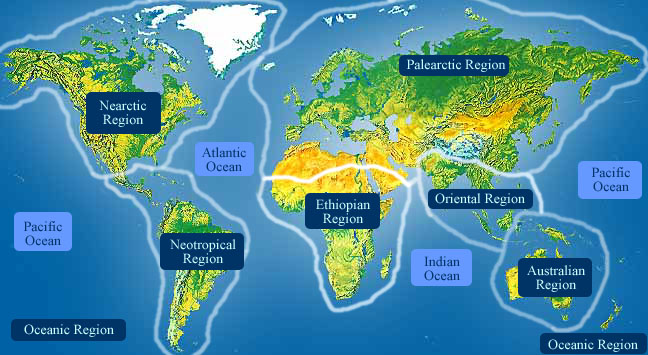
Bradypus pygmaeus, normally chosen monk, dwarf, or pygmy three-toed sloth, is found only on the Isla Escudo de Veraguas of Bocas del Toro, which is located off the coast of Panama. This island is small, only about 5 square kilometers in area. (Anderson and Handley, 2001; Hayssen, 2008)
- neotropical
- native
- island endemic
Habitat
Pygmy iii-toed sloths take been constitute living only in coastal, red mangroves at sea level. (Anderson and Handley, 2001; Hayssen, 2008)
- tropical
- terrestrial
- rainforest
- coastal
Physical Description
Bradypus pygmaeus is similar to Bradypus variegatus but smaller. Pygmy three-toed sloths have vitrify-colored faces with dark circles that surround the eye and go outwards to their temples. Dirt-orange fur covers the face, starting underneath the dark eye circles. The hair on the head and shoulders is long and bushy, distinctive against the shorter facial hair and making it wait as if these sloths have a hood. The throat is brown-gray and the dorsum is speckled and has a night mid-sagittal stripe. Males differ in that they have a dorsal ginger speculum with fuzzy hair post-obit the margin. Pygmy three-toed sloths have in full 18 teeth, 10 from the upper jaw which consists of 2 inductive chisel-shaped teeth and 8 molariform teeth. On the bottom jaw in that location are 8 teeth; ii anterior chisel-shaped, and 6 molariform teeth. The skull is small in comparison to other closely related species, lacks foramina in the anterodorsal nasopharynx, and doesn't accept pterygoid sinuses that are inflated. The zygomatic arch is incomplete with slim roots, and the process of the jugal descends long and thin. Bradypus pygmaeus also take big external auditory meatus. Similar other sloths, torso temperature regulation is likely to exist imperfect, making them heterothermic. (Anderson and Handley, 2001; Hayssen, 2008)
- endothermic
- heterothermic
- bilateral symmetry
- sexes colored or patterned differently
-
- Range mass
- 2.5 to iii.5 kg
- 5.51 to 7.71 lb
-
- Boilerplate mass
- 2.9 kg
- vi.39 lb
-
- Range length
- 485 to 530 mm
- nineteen.09 to 20.87 in
-
- Average length
- 505.4 mm
- nineteen.90 in
Reproduction
There is petty information on the Bradypus pygmaeus mating system. However, in other Bradypus species, there is evidence that males compete for access to mating opportunities with receptive females. (Hayssen, 2008)
Reproduction in Bradypus pygmaeus has not been researched enough to written report details. Bradypus torquatus has been studied more extensively. They copulate towards the end of the dry flavour and early wet season, which occurs from Baronial through October, which results in gestation and lactation occurring during times of plenty of food. Births occur from February to April, marking the cease to the wet season and start of the dry season. One infant is born after a gestation period of 6 months. The interbirth interval is ane year for maned sloths. (Bezerra, 2008; Dias, 2009)
- iteroparous
- seasonal breeding
- gonochoric/gonochoristic/dioecious (sexes carve up)
- sexual
- viviparous
-
- Breeding interval
- A shut relative, Bradypus torquatus, breeds once yearly, but the breeding interval for B. pygmaeus is non known.
-
- Boilerplate number of offspring
- ane
Female person pygmy three-toed sloths invest heavily in young through gestation and lactation, as do females in other sloth species. Details of parental care are non reported for pygmy 3-toed sloths, only related species care for their immature for up to 6 months. (Lynch, 2006)
- precocial
- pre-fertilization
- provisioning
- protecting
- female
- pre-hatching/birth
- provisioning
- female
- protecting
- female
- provisioning
- pre-weaning/fledging
- provisioning
- female
- protecting
- female
- provisioning
Lifespan/Longevity
Picayune information is known at this time near the lifespan or longevity for Bradypus pygmaeus. Other species of sloths have been known to live 30 to twoscore years in captivity. (Beall, 2009)
Behavior
Pygmy three-toed sloths are mainly arboreal, although they can walk on the basis and besides swim. Like other sloths, they can be active at any time of the day and spend much of their time sleeping or sedentary. They are generally solitary and do not tend to travel far. (Anderson and Handley, 2001; Hayssen, 2008)
- arboreal
- scansorial
- diurnal
- nocturnal
- motile
- sedentary
- alone
-
- Range territory size
- 4.3 (low) km^2
Domicile Range
Pygmy 3-toed sloths have home ranges that are small-scale, on average 1.6 ha. (Anderson and Handley, 2002)
Communication and Perception
There is little information on communication in Bradypus pygmaeus. Like other sloths, pygmy 3-toed sloths are likely to have relatively poor eyesight. They may use vocalizations and are probable to use chemical cues in communication.
- visual
- tactile
- audio-visual
- chemic
Food Habits
Pygmy three-toed sloths are arboreal folivores. They eat leaves from many unlike kinds of copse and have low metabolic rates. (Anderson and Handley, 2001)
- plant eater
- folivore
- leaves
Predation
Predators of pygmy three-toed sloths have not been reported. However, like other sloths, they are very slow-moving animals with long, hair that often grows algae, allowing them to blend in well in their leafy habitats. Other sloth species are preyed on past harpy eagles (Harpia harpyja), jaguars (Panthera onca), jaguarundis (Puma yagouaroundi) and ocelots (Leopardus pardalis). (Anderson and Handley, 2001)
- ambiguous
Ecosystem Roles
Because pygmy three-toed sloths are a recently described species, little is known about their ecosystem roles. They are hosts to various parasites, may influence vegetation through their browsing, and act equally casualty for larger, arboreal predators. (Lynch, 2006)
Economic Importance for Humans: Positive
There are no known benefits to humans from Bradypus pygmaeus at this time.
Economic Importance for Humans: Negative
There are no known adverse effects of Bradypus pygmaeus on humans.
Conservation Condition
Because of their extremely restricted range, habitat degradation in that surface area, increasing tourism, and illegal hunting, Bradypus pygmaeus has been listed every bit Critically Endangered by the IUCN. ("IUCN Red List of Threatened Species", 2009; Hayssen, 2008)
-
- IUCN Carmine List
- Critically Endangered
More information
-
- IUCN Red List
- Critically Endangered
More information
-
- US Federal List
- No special status
-
- CITES
- No special status
Bradypus pygmaeus was recently discovered in 2001, which is why a lot of information is defective for the species. Compared to Bradypus variegatus Pygmy three-toed sloths are 15% smaller in total length, and 40% smaller in their mass. (Anderson and Handley, 2001)
Contributors
Farryn Guarino (author), University of Wisconsin-Stevens Point, Chris Yahnke (editor, teacher), University of Wisconsin-Stevens Betoken, Tanya Dewey (editor), Animal Multifariousness Web.
Glossary
- Neotropical
-
living in the southern office of the New World. In other words, Key and South America.
- audio-visual
-
uses sound to communicate
- arboreal
-
Referring to an animal that lives in copse; tree-climbing.
- bilateral symmetry
-
having body symmetry such that the fauna can be divided in one airplane into two mirror-image halves. Animals with bilateral symmetry have dorsal and ventral sides, besides as anterior and posterior ends. Synapomorphy of the Bilateria.
- chemical
-
uses smells or other chemicals to communicate
- coastal
-
the nearshore aquatic habitats near a declension, or shoreline.
- cryptic
-
having markings, coloration, shapes, or other features that cause an brute to be camouflaged in its natural environment; being hard to see or otherwise detect.
- diurnal
-
- active during the day, 2. lasting for 1 24-hour interval.
- endothermic
-
animals that use metabolically generated oestrus to regulate torso temperature independently of ambient temperature. Endothermy is a synapomorphy of the Mammalia, although information technology may have arisen in a (now extinct) synapsid ancestor; the fossil record does not distinguish these possibilities. Convergent in birds.
- folivore
-
an beast that mainly eats leaves.
- plant eater
-
An animate being that eats mainly plants or parts of plants.
- heterothermic
-
having a body temperature that fluctuates with that of the firsthand environment; having no machinery or a poorly developed mechanism for regulating internal body temperature.
- island endemic
-
animals that alive only on an island or set of islands.
- iteroparous
-
offspring are produced in more than one group (litters, clutches, etc.) and across multiple seasons (or other periods hospitable to reproduction). Iteroparous animals must, by definition, survive over multiple seasons (or periodic condition changes).
- motile
-
having the chapters to move from ane identify to another.
- native range
-
the area in which the animal is naturally plant, the region in which information technology is endemic.
- nocturnal
-
agile during the night
- rainforest
-
rainforests, both temperate and tropical, are dominated by copse oftentimes forming a closed canopy with little light reaching the basis. Epiphytes and climbing plants are also abundant. Precipitation is typically not limiting, simply may exist somewhat seasonal.
- seasonal breeding
-
breeding is confined to a detail season
- sedentary
-
remains in the same surface area
- sexual
-
reproduction that includes combining the genetic contribution of two individuals, a male and a female
- tactile
-
uses impact to communicate
- terrestrial
-
Living on the ground.
- tropical
-
the region of the world that surrounds the equator, from 23.5 degrees northward to 23.5 degrees south.
- visual
-
uses sight to communicate
- viviparous
-
reproduction in which fertilization and development take identify within the female body and the developing embryo derives nourishment from the female.
- immature precocial
-
young are relatively well-adult when born
References
2009. "IUCN Blood-red Listing of Threatened Species" (On-line). Accessed August 10, 2009 at http://www.iucnredlist.org/search.
Anderson, R., C. Handley. 2001. A New Species of Three-toed Sloth (Mammalia: Xenarthra) from Panama, with a Review of the Genus Bradypus. Proceedings of the Biological society of Washington, 114: "1-33". Accessed July 27, 2009 at http://web.sci.ccny.cuny.edu/~anderson/publications/AndersonHandley2001ProceedingsBiologicalSocietyWashington.pdf.
Anderson, R., C. Handley. 2002. Dwarfism in Insular Sloths:Biogeography,Pick,and Evolutionary Rate. Development, 56/5: "1045-58".
Beall, Fifty. 2009. "Animal facts: Sloth" (On-line). Helium. Accessed August 17, 2009 at http://www.helium.com/items/990653-fauna-facts-sloth.
Bezerra, B. 2008. Observation of Dark-brown-Throated Three Toed Sloths, Mating Behavior and Simultaneous Nurturing of Two Young. Journal of Ethology, 26/1: "175-178".
Dias, B. 2009. First Ascertainment on Mating and Reproductive Seasonality in Manned Sloths Bradypus torquatus ( Pilosa: Bradypodidae). Journal of Ethology, 27/one: "97-103".
Hayssen, V. 2008. Bradypus pygmaeus (Pilosa:Bradypodidae). Mammalian Species, 812: "ane-4". Accessed July 26, 2009 at http://www.bioone.org/doi/pdf/10.1644/812.one.
Lynch, W. 2006. Slowpokes. Wildlife Conservation, 109/one: "44-49".
What Are the Pygmy Three Toed Sloth Babies Called
Source: https://animaldiversity.org/accounts/Bradypus_pygmaeus/
0 Response to "What Are the Pygmy Three Toed Sloth Babies Called"
Post a Comment